Survival Stories
Lever-Action Rifles: Classic Meets Tactical in Modern Survival Gear

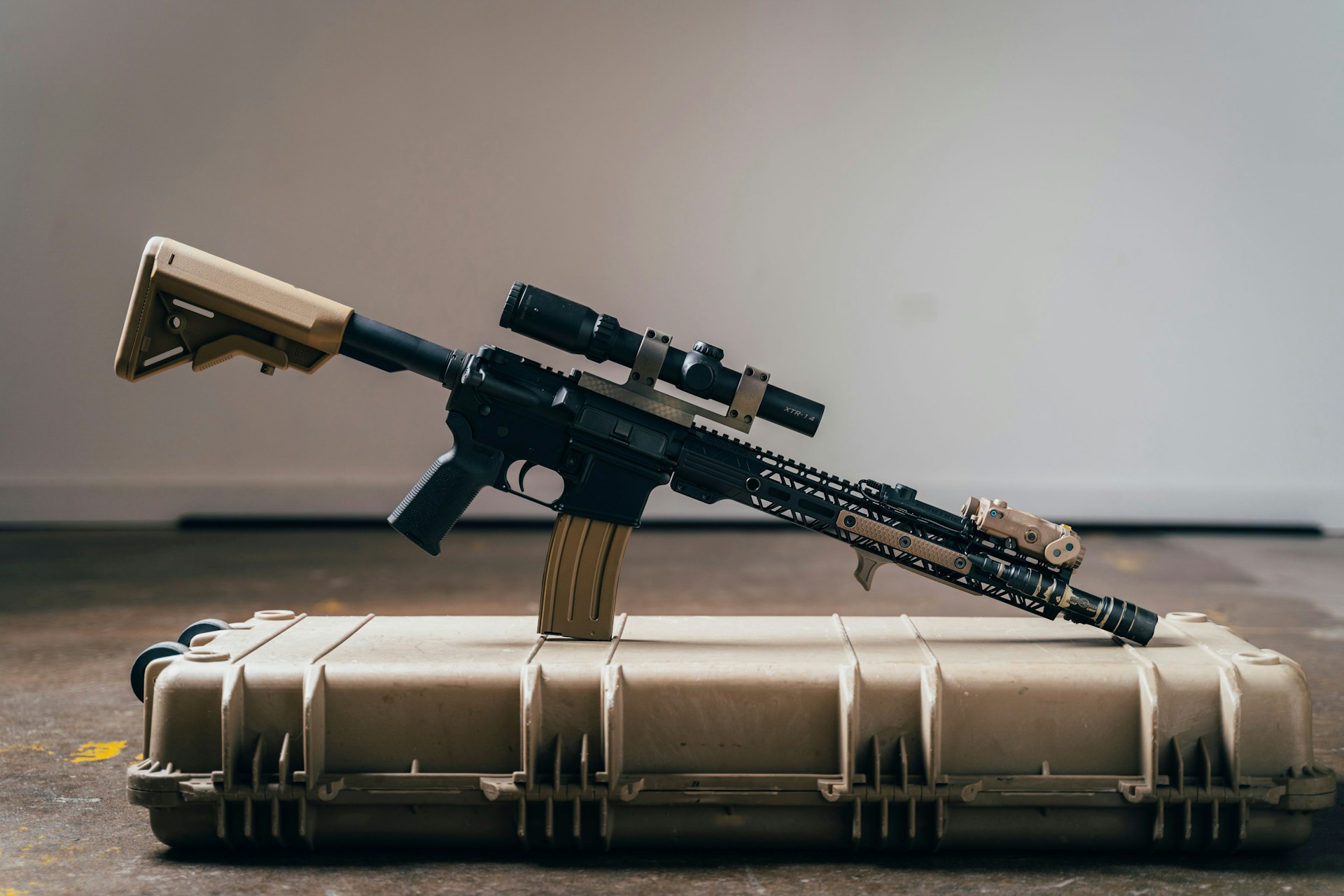
In the world of firearms, there’s a fascinating trend of old becoming new again. The lever-action rifle, once the tool of ranchers and cowboy action shooters, is experiencing a resurgence and evolution. Companies like Midwest Industries and custom houses like Mad Pig Customs are investing resources to modernize this often-overlooked platform.
“Why?” you might ask.
There isn’t a definitive answer. If you’re focused on practicality and cost-effectiveness, the modern semi-auto rifle with a detachable 30-round magazine has undeniable advantages. However, the updated lever gun, sometimes known as “the cowboy assault rifle,” has its merits.
A rifle with a manually cycled action and tube magazine can bypass almost any assault weapon restriction in the country. This makes the tactical lever gun an attractive option for those living in or traveling through areas with stringent gun laws, while still providing an accurate, powerful rifle with a range of modern accessories.
Caliber options for these rifles are diverse, ranging from rimfire to the formidable .45-70. The two rifles featured in this article are in .30-30 Winchester, a caliber known for its versatility in hunting and defense. With bullet weights typically ranging from 150 to 170 grains and muzzle velocities around 2,000 feet per second, the .30-30 has been used on nearly every game animal in North America.
Although not known for its long-range capabilities, it’s generally accepted as a 200-yard cartridge, which aligns with most mass-issue military calibers. Its trajectory and ballistic data is very similar to that of the 7.62x39mm Russian, the most widely used military caliber on the modern battlefield. While a lever gun lacks the capacity or rate of fire of an AK-type rifle, the .30-30 is in very good ballistic company when it comes to use in mixed terrain environments.
Preparation is an intensely personal pursuit. Some people don’t feel the need for the capacity or fire rate of a modern semi-automatic carbine. But many of those same people think it wise to have a firearm for the “just in case” scenarios. A lever-action rifle is easier to shoot than a pistol and has a longer range than a shotgun. Until a few years ago, choosing this option meant sacrificing easy access to modern enhancements like suppressors, weapon lights, electronic optics, lasers, modular grips, or adjustable stocks. Those days are over.
We’re showcasing two separate rifles, both built by Mad Pig Customs, each with different furniture and accessories. Mad Pig refinished each rifle in our preferred Cerakote colors, installed their signature lever and trigger parts, and performed a complete action job to ensure smooth and reliable functionality. We hope to shed some light on the myriad possible configurations available with a modernized lever-action rifle and prove once and for all that this platform hasn’t been relegated to history books.
The first rifle started life as a Marlin 30AW. No longer in production, the 30AW was meant as a more budget-friendly alternative to the flagship Marlin 336. With less expensive furniture material and less refinement in the fit and finish, the 30AW was truly a working man’s gun. The team at Mad Pig Customs stripped this rifle down to the skeleton and rebuilt it, starting with a Midwest Industries M-LOK handguard and a Form Stocks back end.
The second rifle has been a so-called “tactical” lever gun from day one. It started out as a Marlin 336 Dark Series, a special variant that was only available for a short time before Remington went bankrupt, ceased production of Marlin rifles, and sold the brand to Ruger. (Ruger recently announced the re-launch of the Marlin Dark Series, this time with a M-LOK forend and adjustable stock straight from the factory.)
One of the downsides of lever guns is their tube magazines, which make their manual of arms more like that of a shotgun than a modern bolt-action or semi-auto. While we’ve already touched on the idiosyncrasies of reloading, this also affects ammo carriage and load bearing. You won’t be carrying a box magazine in a belt pouch, so you’re left with tossing a fistful of loose rounds in your pants pocket — a compromise that’ll inevitably lead to slow, fumbled reloads — or seeking specialized ammo carriage equipment that’s a little harder to source. We found two companies who offer lever-gun-specific ammo pouches.
Wilderness Tactical offers a simple, low-profile solution called the ZipLoader. This is the equivalent of wearing an ammo butt cuff on your belt. It’s a simple nylon platform with 10 elastic loops for individual cartridges. We paired this with a small, zippered Bug Pack, also from Wilderness Tactical, which was used to carry loose rounds to replenish our other ammo carriers between drills.
For those who want a larger supply of organized ammo storage, or more flexibility for carriage, Grim Hunter Tactical makes two products we had the chance to evaluate for this article. The first is their Quick Loader Pouch, a fold-out pouch that carries 24 rounds. There are eight loops hard sewn to the outside of the pouch. Inside the pouch are two more tear-away “cards” that hold another eight rounds each, which attach to the inside of the pouch by hook-and-loop.
If your lever gun is your dedicated bugout or SHTF rifle, Grim Hunter offers a Lever Gun Chest Rig consisting of two Quick Loader Pouches and a third detachable pouch that can be used as a medical kit or admin pouch. On Grim Hunter’s website, you can choose to have your ammo pouches biased to the left or right side of the rig, based on personal preference. It’s available in a variety of colors with multiple harness options.
Finally, much like a shotgun, it may be advantageous to carry a few extra rounds on the gun itself for speed reloads. These can be carried on a traditional fabric or leather butt cuff or attached to modern M-LOK-mounted carriers such as those seen on our rifles.
While testing and training with our lever guns, we used Sellier & Bellot 150-grain soft-point .30-30 ammo.
The effectiveness of any tool is contingent on its user’s skill and experience, and our lever-action rifles are no different. The two of us have spent quite a bit of time training with AR-15s, but AR-15s these ain’t. Many of the fundamentals carry over — stance, grip, sight picture, trigger control, and so on. However, the manual of arms is drastically different from an AR, in addition to the reloading and ammo management challenges we mentioned earlier.
This led us to seek training from Lew Gosnell, an instructor who has amassed a variety of vintage and modern lever-actions and spent many years teaching students about the intricacies of these rifles. Gosnell is a Marine Corps veteran who also spent 31 years working in law enforcement on the streets of East L. A. These days, he teaches Defensive Lever Gun and other courses at Gunsite Academy in Paulden, Arizona.
In case you’re not familiar with Gunsite, it’s considered by many to be the mecca of firearms training in the United States, if not the whole world. Founded in 1976 by Lt. Col. Jeff Cooper as a location at which to teach his Modern Technique of the Pistol, Gunsite has evolved into an expansive facility with a wide range of pistol, rifle, shotgun, and even edged weapon classes.
It offers everything from classrooms and traditional range bays to run-and-gun Simulator courses, complex shoot houses, and vehicle-based training areas. It’s like an amusement park for shooting enthusiasts, complete with catered lunches, an on-site campground, and a museum built inside Cooper’s home.
After traveling to Gunsite and meeting Gosnell, we headed out to the 50-yard Hanneken range to start working with our lever guns.
The first order of business was to learn about manipulating the lever gun’s safeties. Both of our Marlin rifles feature manual cross-bolt safeties — Marlin calls it a Hammer Block Safety — but this feature is a relatively recent addition introduced in the early 1980s. Gosnell and many other lever gun users view this manual safety as redundant and excessive. Historically, the primary safety on an exposed hammer lever gun was the half-cocked position, pulled back halfway to full cock.
This prevented the hammer from resting against the firing pin, which could potentially fire a round if an object struck the hammer hard enough. It also prevented users from carrying the gun fully cocked and ready to fire at all times, which could lead to a negligent discharge if a foreign object touched the trigger.
To prepare our lever guns for a drill, we went through the following procedure:
* Half cock the hammer then engage the manual safety.
* Cycle the lever to chamber a round. The hammer is now fully cocked. (Top off the tube magazine with one more round if necessary.)
* With the manual safety still engaged and the gun pointed in a safe direction, place the firing hand thumb on the fully cocked hammer and apply pressure.
* Maintaining firm pressure on the hammer, press the trigger just long enough to carefully lower the hammer into the half-cocked position.
* Index the trigger finger safely on the side of the receiver and disengage the manual safety.
As soon as Gosnell gave the command to fire, we quickly thumbed our hammers back to fully cocked position and pressed the trigger.
In a way, the manual safety serves as training wheels — if a shooter lets the hammer slip while returning it to half cock, it prevents the gun from firing. But once we had done enough dry and live fire reps of this process to be fully comfortable with it, we left the manual safety disengaged and carefully returned our guns to half cock after firing. Always be careful to maintain a good grip on the hammer while returning it to half cock; this isn’t something that should be rushed. As Gosnell explained, this procedure may feel strange to us today, but it was the standard modus operandi for more than a century before the introduction of cross-bolt safeties.
Loading a lever gun is similar to loading a shotgun, but the placement of the loading gate on the right side of the receiver (as opposed to the underside) means you’ll have to load with your firing hand. Hold the gun in a low-ready position against the shoulder and press each round into the tube magazine until the loading gate closes behind it. Alternately, you can use a “violin load” position by resting the buttstock sideways over your shoulder, leaving the loading gate facing upward. Gosnell reminded us to keep our heads up and eyes downrange while loading to remain aware of potential threats.
Also like a shotgun, it’s OK to load a round directly into the chamber while the action is open. This can be useful for speed reloads in conjunction with a match-saver-style ammo carrier directly in front of the ejection port (as seen on both our rifles). However, be aware that lever guns can have trouble feeding if they’re operated at steep angles. So, don’t try to chamber load — or operate the lever at all — with the muzzle pointed at the ground.
To run the lever, be quick and forceful but deliberate. Babying it or failing to run the lever all the way forward may induce a malfunction. We also found that the angle of hand movement is important. Depending on your rifle and lever design, you may need to push your hand down, forward, or somewhere in between to achieve the smoothest action.
Once we were comfortable manipulating, loading, and firing our lever guns on the 50-yard range, we moved on to more complex challenges. After all, that manual of arms may feel comfortable on a flat range, but doing it while running, transitioning between multiple targets, and navigating around obstacles is a different story. This wasn’t just a lever gun class — it was a defensive lever gun class.
We started by setting up a barricade on the range, leaning out from either side to shoot without exposing ourselves more than necessary. Then, we ratcheted up a notch by heading down to The Pit, an indoor Simulator course that most of us would call a shoot house. We practiced clearing the structure, “slicing the pie” around doorways and corners to methodically take in every angle before proceeding.
Admittedly, we’d prefer a semi-auto rifle over a lever gun for these close-quarters applications, since thumbing back the hammer before firing and running the action between shots was tougher than just mashing a trigger. That said, our Mad Pig Marlins had no trouble getting repeatable, accurate hits on the threats in hallways, corners, and windows. The tall-mounted red-dot optics on both rifles were helpful for this purpose, offering a wide field of view and fast sight acquisition.
Next, we headed to Gunsite’s Military Crest, a winding trail with various natural shooting positions and an array of steel targets at distances of 100 to 200 yards or greater. We braced off trees and rocks, and used our rifles in standing, kneeling, and sitting positions. With a slight hold-over for the longer shots, we had no trouble ringing steel from each position. The only challenge we encountered was running the lever in positions where the rifle was rested on a flat surface, such as kneeling behind a stump; it may be necessary to lift or rotate the rifle to make room to move the lever. This is also why lever guns aren’t ideal for prone shooting.
For our final challenge, we moved to the Scrambler, a course that continued our work on positional shooting but added an emphasis on speed. With four rounds in our guns and a shot timer running, we sprinted between seven positions and shot steel targets while standing, kneeling, and sitting. Some stations had fallen logs or trees to use for support, but others required unsupported shots. This also tested our ability to load our rifles quickly while moving, and to carefully engage the half-cocked position after each hit — just like any other move-and-shoot drill, it’s essential to make your weapon safe before running ahead with it. By the end of the Scrambler, we were out of breath and grinning.
So, is it worth the effort to teach an old gun new tricks? Based on our experience with these two builds and our range time at Gunsite, we’d give an emphatic yes. While we certainly won’t deny there are more efficient, ergonomic, and cost-effective defensive weapons on the market, that doesn’t mean the venerable lever gun isn’t worth owning. And if it’s worth owning, it’s worth modifying and improving with aftermarket parts, just like your favorite semi-auto carbine.
These two modernized lever guns were built to deliberately push the envelope and become as AR-like (or “tactical,” if you prefer that term) as possible. They’re unabashedly extreme, like classic muscle cars converted into fire-breathing supercharged dragsters. You may not want a full M-LOK forend and adjustable stock for your lever gun, much less an infrared laser and night-vision-height optic mount, and that’s OK. Our intent was to show what’s possible using existing off-the-shelf components and a little fine-tuning in the hands of lever gun specialists at Mad Pig Customs. The result is a pair of rifles that never fail to stir up controversy on social media or draw a crowd at the local range. More importantly, they’re much more capable for dynamic shooting and defensive use than they were in unmodified form. Sorry, grandpa, you may not like it, but the future is now.
Our Thoughts
The resurgence of the lever-action rifle is a fascinating reflection of how history and innovation intertwine in the world of firearms. While the modern semi-auto rifle holds advantages in practicality and cost-effectiveness, the updated lever gun emerges as a viable option for survivalists, especially for those in areas with strict gun laws.
The versatility of the .30-30 Winchester caliber used in the featured rifles is noteworthy. Its ballistic data, similar to the widely used 7.62x39mm Russian, makes it a reliable choice for mixed terrain environments, despite the lever-action rifle’s limitations in fire rate and capacity.
The evolution of the lever-action rifle is a testament to the adaptability and creativity within the firearms industry. The modern enhancements to the classic design have expanded its range and functionality without sacrificing its historic charm.
The integration of tactical elements into the lever-action rifle, such as modular grips and adjustable stocks, is a significant step forward in transforming this platform into a more versatile tool for survivalists. It’s an exciting development that pushes the boundaries of what is possible with this classic firearm.
In conclusion, the lever-action rifle’s resurgence and evolution is a welcome trend that merges the past with the future. It’s a reminder of how, in the world of survival, practicality, and adaptability are key.
Let us know what you think, please share your thoughts in the comments below.


As someone who’s spent a fair bit of time in the great outdoors, I’ve learned a thing or two about the importance of navigation. Now, I’m not talking about the kind you use to find the nearest gas station on a road trip. I’m talking about the kind that can mean the difference between life and death when you’re stranded in the wilderness. And in this day and age, that means understanding GPS technology.
GPS, or Global Positioning System, is a network of satellites that orbit the Earth, transmitting signals that can be picked up by devices on the ground. These signals are used to calculate the device’s exact location, anywhere in the world. It’s a powerful tool, and it’s revolutionizing the way we approach wilderness rescues.
When you’re lost in the wilderness, every minute counts. The longer you’re exposed to the elements, the greater your risk of hypothermia, dehydration, and injury. Traditional search and rescue methods can take hours, even days, to locate a lost individual. But with GPS, rescuers can pinpoint a person’s location in a matter of minutes.
GPS technology is not just about speed, though. It’s also about accuracy. In dense forests or rugged mountain terrain, it’s easy for rescuers to miss a person, even if they’re just a few feet away. But with GPS, they can zero in on a person’s exact location, reducing the risk of a missed rescue.
But here’s the thing: GPS technology is only as good as the device it’s used on. That’s why it’s so important to have a reliable, high-quality GPS device when you’re venturing into the wilderness. And no, I’m not talking about the GPS on your smartphone. While that might be fine for city navigation, it’s not designed to withstand the rigors of the great outdoors.
When choosing a GPS device, there are a few key features to look for. First and foremost, it should be rugged and waterproof, able to withstand drops, dust, and water. It should also have a long battery life, as you never know how long you’ll need it. And it should have a clear, easy-to-read display, so you can quickly and easily read your coordinates, even in harsh lighting conditions.
Another important feature is the ability to send and receive messages. Some GPS devices come equipped with two-way satellite communication, allowing you to send an SOS signal and communicate with rescuers in an emergency. This feature can be a literal lifesaver, enabling you to convey vital information about your condition and situation.
It’s also worth considering a device with mapping capabilities. Detailed topographic maps can help you navigate unfamiliar terrain and plan the safest route. And with some devices, you can even download maps and updates via satellite, so you’re always equipped with the most up-to-date information.
But remember, while GPS technology is an incredible tool, it’s not a substitute for knowledge and skills. You should still learn how to read a map and compass, understand basic survival skills, and know what to do in an emergency. Because when it comes down to it, technology can fail, but your knowledge and skills can’t.
So, whether you’re a seasoned adventurer or a weekend hiker, don’t underestimate the power of GPS technology. It could be the difference between being lost and being found. But remember, it’s just a tool. The real key to survival is you.
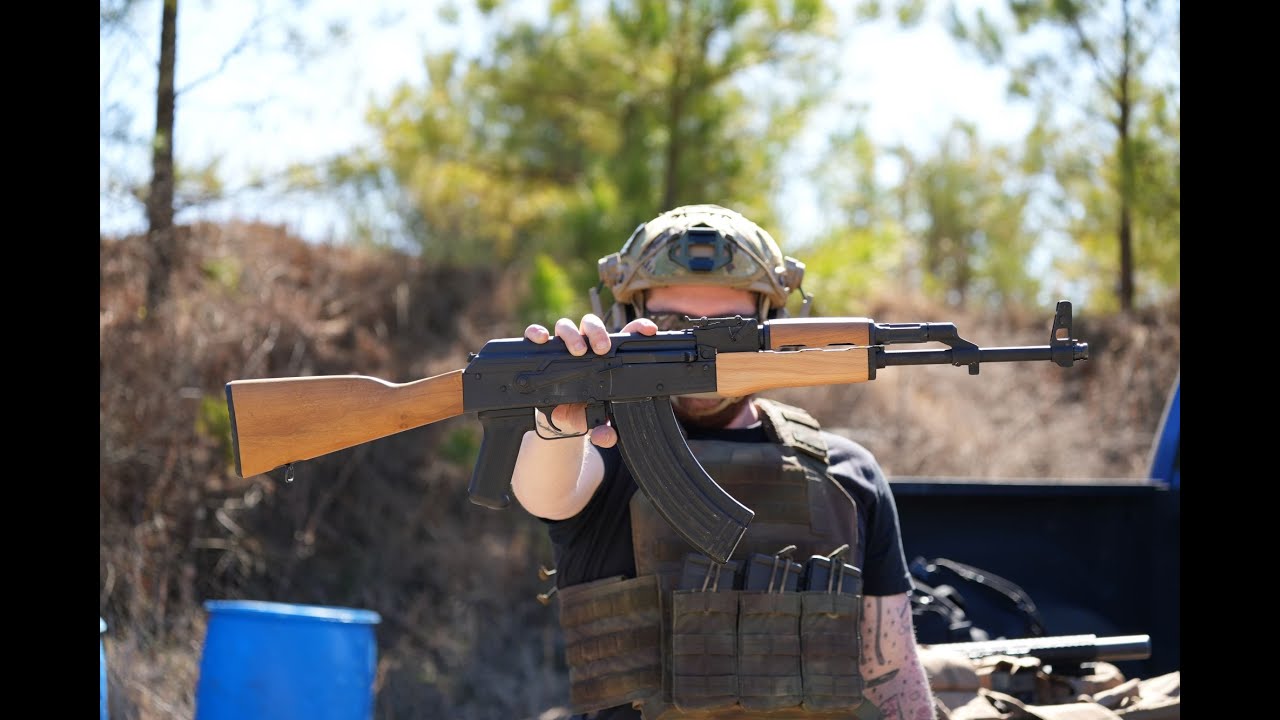
The world of AK variants is as diverse as it is contentious, with every gun enthusiast seeming to have a firm opinion on which model reigns supreme. Among the cacophony of voices, one recommendation often rings out: “Just get a WASR!”
The Romanian-made WASR series has carved out a niche in the U.S. imported firearms market, often hailed as the gold standard of affordable AKs available in the country. Century Arms, one of the largest firearms importers in the U.S., attributes much of its success to the “massive demand” for the WASR.
The question that remains is whether the WASR lives up to its legendary reputation. Is it the go-to AK variant for those on a budget? To answer these questions, we’ll delve into our experiences with the rack-grade WASR-10 in 7.62×39, from firing and handling to a thorough inspection by a qualified AK gunsmith.
The WASR series, imported by Century Arms, is built by Cugir Arms Factory in Cugir, Romania. The factory has a rich history, evolving from an iron-processing facility established in 1799 in the hills of Transylvania. The WASR-10 is essentially a semi-automatic version of the Pistol Mitralieră model 1963 (PM md. 63), a licensed version of the Soviet AKM. With its simple wood furniture and well-known design, these Romanian rifles are a no-frills variant of the AKM.
The WASR we have today is the result of years of improvements. One of the most significant upgrades is the elimination of “trigger slap” in current models through an aftermarket trigger. This issue, which involves the bolt slapping back into the hammer as it travels, impacting the disconnector/trigger and snapping it back into the shooter’s trigger finger, is thankfully uncommon in modern AKs like the current WASR-10 offerings from Century.
Before testing, we had local AK expert Josh from Copperhead USA in Tempe, Arizona, inspect our WASR. It’s important to remember that AKs often require real gunsmithing, unlike other platforms where swapping internal components is relatively straightforward. AK tolerances can vary greatly, even from the same factories at different times. If you’re considering delving deeper into the AK platform, investing time and money in learning to be competent rather than just enthusiastic is well worth it.
Our WASR-10 was in good shape when we unboxed it, as expected from a basic imported AK. However, AKs require many parts to be pressed and/or riveted together, and if done incorrectly, it can lead to serious issues down the line. Josh checked the headspace, as it’s possible for an AK to fire out of battery, which can cause serious problems. Our WASR was found to have good headspace after appropriate gauging. Josh also noted that it had a tight chamber, which we’ll discuss later. It’s not uncommon to find a canted (i.e., tilted) front iron sight post on an imported AK, but luckily, our WASR’s sights were fine.
The rest of the issues were purely cosmetic, but it’s important to have some knowledge of the platform to make those distinctions. The gas block was slightly canted, and the slant brake muzzle device didn’t sit flush on the muzzle due to the detent retaining it being slightly too long. It appeared the bolt carrier had been dropped at some point, as there was a small ding on the top of the carrier just forward of the recoil spring assembly. The safety was also remarkably tight, even after bending it out, which is another common issue with many AKs.
The wood furniture was nothing special; in fact, it even manifested some unexpected issues during testing. The trigger was a typical spongy AK trigger with a tactile reset and a curved bow. Based on everything we saw, this wasn’t a cherry-picked rifle and is a good measure of what you can expect from a WASR-10.
Testing was straightforward — the best way to test a new rifle is to fire it. In particular, firing an AK with a tight chamber helps fit the bolt to the chamber, reducing that issue. We loaded 500 rounds of Red Army Standard steel case 7.62×39 ammo into four different types of mags for our break-in range day. These included US PALM AK30R magazines, XTech MAG47 polymer magazines with steel locking lugs, Magpul MOE magazines, and Bulgarian steel 30-round mags from GunMag Warehouse.
The first mags of all four types presented no issues. However, the second XTech mag failed to feed on the last round, which also set the bullet back in the casing far enough to make us discard that round. Other than that, the only magazine issue we experienced was difficulty seating them, which is a combination of needing to break in the mag release lever and the mags themselves.
As we fired round after round, the rifle’s entire barrel and handguard were rippling with heat and smoke, but it kept going. After firing 500 rounds of steel-case ammo in less than 30 minutes during our aggressive break-in test, the WASR-10 held up remarkably well. Sure, it had a few minor issues out of the box, but most were purely cosmetic, and none would be insurmountable without a minor repair or continued use to break in the components.
With an MSRP of $1,070, the WASR-10 from Century Arms isn’t the cheapest AK you can buy, but it remains one of the best value-for-money options on the market. If you’re shopping for your first AK or simply want a reliable, durable rifle, it’s worth considering. However, if you’re expecting a flawless finish, 1 MOA accuracy, and the ability to add a modern sighting system without purchasing an aftermarket mount, you might want to consider a different AK or even a different platform altogether.
AKs continue to be a staple of the American firearms market, even as prices rise. If you’re looking for an affordable, reliable, and fun-to-shoot AK, the WASR-10 from Century is a solid choice. As it turns out, its reputation is well-deserved.
Our Thoughts
The WASR-10 is indeed an interesting piece of hardware. Its reputation as a budget-friendly yet reliable AK variant is well-earned, as our experience suggests. The Romanian roots and the long history of the Cugir Arms Factory lend an air of authenticity that is hard to ignore.
The AK platform is not without its challenges, as indicated by the need for real gunsmithing. That said, the WASR-10 seems to have overcome many of these issues, thanks to years of improvements. The elimination of the “trigger slap” is a significant enhancement, making the WASR-10 a more user-friendly option for AK enthusiasts.
We appreciate the thorough inspection by our local AK expert, Josh. It’s a reminder that a well-built AK requires careful assembly and the right expertise. The WASR-10 passed the test with flying colors, only showing minor cosmetic issues that don’t affect its functionality.
The WASR-10’s performance during testing was commendable, holding up well despite the aggressive break-in test. This robustness, coupled with its affordability, makes it an attractive option for those seeking a reliable AK variant.
It’s worth noting that the WASR-10 isn’t for everyone. If you’re after a flawless finish, pinpoint accuracy, or the ability to add a modern sighting system without additional expenditure, you might want to look elsewhere. However, for those seeking an affordable, reliable, and enjoyable AK experience, the WASR-10 is a solid choice, and its reputation is well-deserved.
Let us know what you think, please share your thoughts in the comments below.

In the intricate dance of contemporary warfare, the urban landscape often serves as the stage. The past and present suggest that future conflicts will inevitably seep into the arteries of our cities, necessitating a deep understanding of urban defense strategies. This notion is investigated by John Spencer and Jayson Geroux of the Modern War Institute at the West Point Military Academy. They assert, “if leveraged effectively, a solid urban defense can decisively tip the scales of war.”
Urban environments are complex mazes of buildings, streets, and alleys, creating a unique battlefield that differs greatly from open fields or forests. Historic urban battles, such as the renowned Battle of Stalingrad or the struggle for Mosul, provide valuable lessons on effective urban defense. The key lies in preparation, strategic planning, and the ability to swiftly adapt tactics as situations evolve.
Narrow urban pathways, such as alleys, can serve as choke points, disrupting the advance of an enemy force and potentially providing an opportunity to employ massing effect strategies.
When devising a defense strategy for a city, there are several key tactics derived from military guides and historical precedents:
* Disruption: This strategy involves fracturing the unity of the enemy’s forces, hindering their ability to effectively execute their plans. In urban settings, disruption can be achieved by manipulating the terrain to divide enemy units, impair their communications, and disrupt their logistics, effectively slowing their momentum and making them more susceptible to counteractions.
* Massing Effects: This principle refers to the concentration of combat power at the right place and time to achieve maximum impact. In urban defense, massing effects might involve concentrating firepower in an area likely to be breached by the enemy or organizing forces discreetly for a surprise counterattack against an advancing adversary.
* Flexibility: A crucial element of any successful defense, flexibility refers to the ability to rapidly adapt to changing circumstances. This includes altering tactics in response to enemy movements, repositioning forces to exploit newly identified weaknesses in the enemy’s approach, and adapting defensive measures to accommodate the evolving urban landscape.
Urban centers are filled with potential resources to create obstructions to enemy movements.
Examining how soldiers defended “Pavlov’s House” in Stalingrad or utilized ruined buildings in Ortona provides valuable insights for modern urban defense.
As the nature of warfare evolves, so must our methods of defending cities. Combining time-tested strategies with modern technology will prepare us for future conflicts. Cities offer a multitude of ways to protect and defend, and leveraging lessons from the past will aid in devising intelligent plans for future conflicts.
This knowledge is not only vital for military commanders, but the skills and tactics involved in urban defense are also invaluable to civilians attempting to survive amidst conflict. This was explored in Selco Begovic’s interview recorded in the SHTF Anthology, which underscores the importance of understanding and mastering urban defense.
Defending a city requires as much intellectual prowess as physical strength. Urban defense is a blend of art and science, demanding a comprehensive understanding of both the physical and historical landscapes of urban combat. Looking forward, the lessons gleaned from past urban battles, combined with a solid grounding in military doctrine, will equip today’s defenders with the strategies necessary to secure victory.
Our Thoughts
The urban landscape’s complexity indeed presents a unique battlefield, as the article rightly suggests. The notion of urban defense is not just a military strategy; it’s a survival skill that could prove vital for civilians caught in the throes of conflict.
The key elements of disruption, massing effects, and flexibility are fundamentally sound strategies. Disruption, in particular, resonates with our survivalist ethos, as it mirrors the idea of using the environment to your advantage.
However, the article’s emphasis on the importance of historical precedents is crucial. The Battle of Stalingrad, the struggle for Mosul, and the defense of “Pavlov’s House” offer invaluable lessons that can be applied in modern urban defense strategies.
The idea of blending time-tested strategies with modern technology is intriguing. As we often advocate, the best survival strategies combine traditional wisdom with modern advancements.
Finally, the assertion that defending a city requires intellectual prowess as much as physical strength aligns perfectly with our belief that survival is as much a mental game as it is a physical one.
In conclusion, the article offers a compelling exploration of urban defense that resonates with our survivalist mindset. It reiterates the importance of being prepared, adaptable, and resourceful—principles that are the very essence of survivalism.
Let us know what you think, please share your thoughts in the comments below.
-

 Off The Grid5 months ago
10 Foods That Could Save Your Life When Grocery Shelves Are Empty
-

 Tactical2 years ago
70-Year-Old Fends Off Intruder with Lead-Powered Message
-

 Tactical2 years ago
Vape Shop Employee Confronts Armed Crooks, Sends Them Running
-

 Preparedness4 months ago
5 Things You Should Always Carry During a Winter Storm
-

 Nature and Wildlife5 months ago
10 Survival Skills You Should Learn Before You Need Them
-

 Preparedness2 years ago
Ex-Ballerina’s Guilty Verdict Sends Tremors Through Gun-Owner Community
-

 Preparedness5 months ago
Smart Person’s Checklist: 10 Things You’ll Wish You Had When Disaster Strikes
-

 Preparedness10 months ago
Discover Free Land in These Three Surprising States